Obstacle Detection Window Cleaning Robot
Model:311
LIESA makes the obstacle detection window cleaning robot in Qingdao, China, for glass carrying a handle, a latch or a mullion. The unit slows, offsets its path by the width measured, passes the feature and returns to the original line. Liesa Intelligent Technology has built household appliances in Qingdao since 2014, and supplies the model with OEM branding.
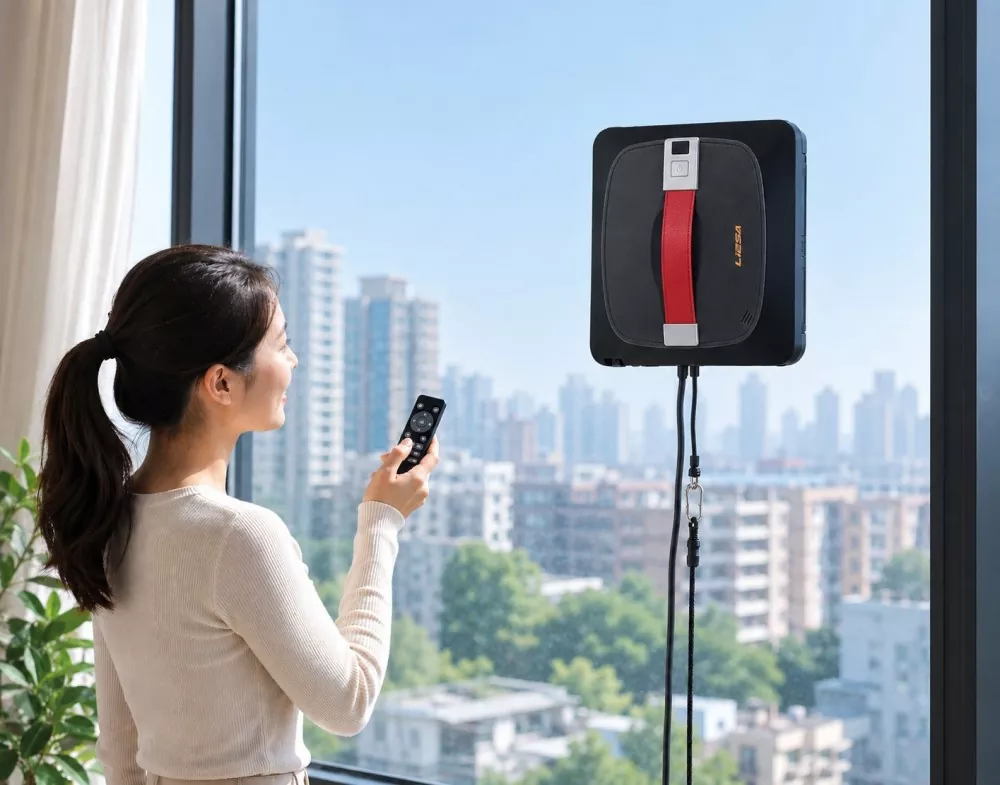
Designed for glass with handles, latches, mullions and other raised features, the Obstacle Detection Window Cleaning Robot identifies obstacles in the cleaning path and adjusts its route instead of stopping at the obstruction.
LISA, a China supplier of window cleaning robots, focuses on the response after detection as well as the sensing itself. The robot can slow down, change position or continue along the planned route according to the detected feature, helping reduce repeated stops and unnecessary contact between the cleaning pad and surrounding fittings.
Specifications
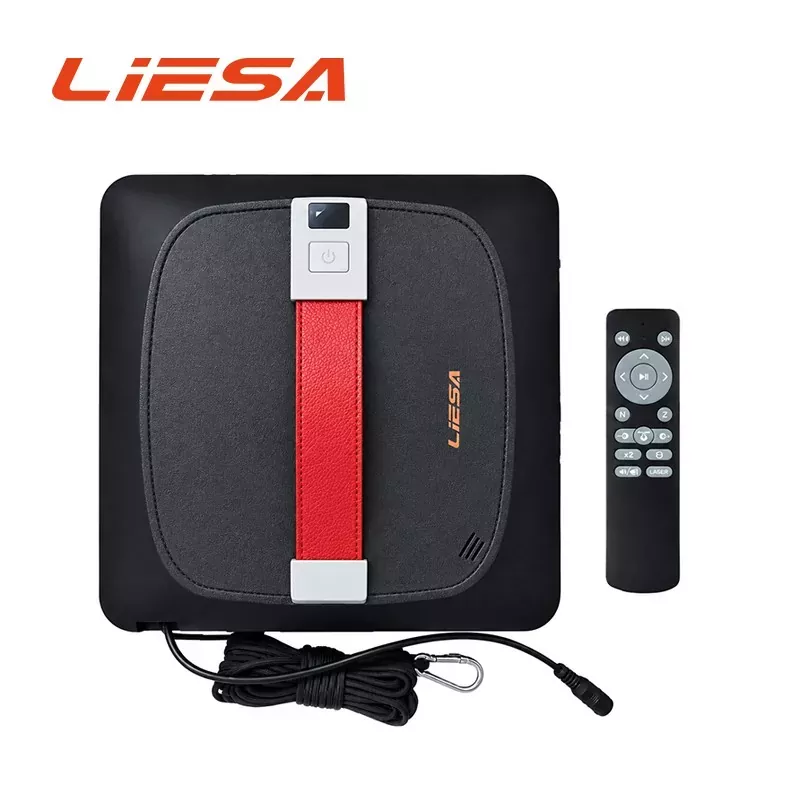
| Model | 311(square shape) | |
| Specification | ||
| Color | White/Black/Custom | |
| Unit Dimensions (L*W*H) mm | 229*229*65 (including wheel height) | |
| Unit Material | Engineering-grade ABS | |
| Unit Net Weight (kg) | 1.4 | |
| Gross Weight (including 1in1 carton, kg) | 2.6 kg | |
| Base Dimensions (L*W*H) mm | 373*262*87 mm | |
| 1in1 Carton Dimensions (L*W*H) mm | 388*100*285 mm | |
| 5in1 Carton Dimensions (L*W*H) mm | 545*405*310 mm | |
| Top Cover Logo | YiYin/Sticker | |
| Feature | Description | |
| Working Modes | 1. N-pattern cleaning, | |
| 2. Z-pattern cleaning, | ||
| 3. Upward cleaning, | ||
| 4. Downward cleaning, | ||
| 5. Leftward cleaning, | ||
| 6. Rightward cleaning, | ||
| 7. Full-point cleaning, | ||
| 8. XZ-axis cleaning (N+Z), | ||
| 9. Left-only N-pattern cleaning, | ||
| 10. Right-only N-pattern cleaning | ||
| Backup Battery Operating Time | Approx. 20-30 mins | |
| Charging Time | Approx. 2.0 h | |
| Operating Noise | Approx. 65 dB | |
| Operating Temperature & Humidity Range | 0-40°C / 85% RH | |
| Rated Power | 72 W | |
| Rated Voltage | 24 V | |
| Service Life | ≥400 h | |
| Bidirectional Auto Water Spray | Yes (Atomized) | |
| Number of Spray Heads | 2 (Dual-side spray, 1 head per side) | |
| Water Spray Volume | 0.17 ml/min | |
| Effective Spray Area | Approx. 120 m² | |
| Low Water Alarm | Yes (Motorized water valve) | |
| Edge Air Pressure Detection | Yes | |
| Variable Frequency Airflow Algorithm | Yes | |
| Antifreeze Control Algorithm | Yes | |
| UPS (Uninterruptible Power Supply) | Yes | |
| Automatic Air Spray Adjustment | Yes | |
| Belt Self-Cleaning | Yes | |
| Anti-slip Belt | Yes | |
| Hybrid Management | Yes | |
| Multi-language Support | Yes (Chinese + 1 language included; additional languages available at extra cost) | |
| Fan Speed | 31,500 RPM ±10% (No load) | |
| Speed Settings | Fixed | |
| Maximum Vertical Drop Under Timed Spray | 5.5 kgf | |
| Fan Operating Pressure | 2400-2800 Pa | |
| Manual Update | Yes | |
| Low Battery Alarm | Yes | |
| Control Method | Remote control (Infrared) / APP (Optional) | |
| Minimum Working Area Size | 60 * 40 cm | |
| Applicable Spray Coating Thickness | ≥3 mm | |
| Suitable Applications | Deep pools, garden landscapes, large stone walls, fountains, wooden doors, etc. | |
| Feature | Sub-feature / Specification | Details |
| Indicator Light | Power indicator / Different color meanings | Yes |
| Motor | Momentary motor type | DC Brushless Motor (Full air-cooled) |
| Drive motor type | 2 pcs DC Brushless Motors | |
| Battery | Battery type | Cylindrical Lithium-ion Cell |
| Battery capacity (mAh) | 500 (4 x 14500 cylindrical batteries) | |
| Charging current (mA) | Approx. 230 (at constant current) | |
| Water Tank | Capacity (ml) | 60 |
| Water spray | Dual-row ceramic nozzles (2*1) | |
| Adapter | Input: AC(V), Frequency(Hz), Current(A) | AC 100~240V, 50/60Hz, 2.0A |
| Output: Voltage(V), Current(A) | 24V / 3.0A | |
| Safety Line | Safety guard (Kgf) | 135 |
| Safety rope length | Approx. 5m | |
| Other | Quantity | 2 |
| Dimensions (LWH) mm | 233 * 233 * 4.0 | |
| Sensors | 6-axis sensor | 1 |
| Photoelectric sensor | 4 | |
| Water level sensor | 1 | |
| Highly sensitive air pressure sensor | / | |
| Certifications | CE | Yes |
| FCC ID | Yes | |
| RoHS | Yes | |
| WEEE | Yes | |
| Installation Data | 20Hz container capacity | 2200 pcs |
| 40Hz container capacity | 4300 pcs | |
| 40HQ container capacity | 5200 pcs | |
What Counts as an Obstruction
Four features cover most cases. A casement handle inside the frame is the most common. A latch or a lock stand proud of the glass on sliding doors. A mullion divides the opening, which the obstacle detection window cleaning robot treats as an edge rather than an obstacle. And a curtain or blind cord against the pane is detected before the pad reaches it, so fabric is not drawn into the cleaning path.
The response to each is set rather than improvised. the obstacle detection window cleaning robot slows, offsets the route by the width it has measured, passes the feature and returns to the original line. Because the offset is recorded, a second pass over the same pane follows the same path rather than discovering the obstacle again.
Detection Methods Compared
| Method | What it detects | Behaviour |
| None | Nothing | Route ends at the obstruction |
| Contact sensing only | Resistance when the body meets a feature | Stops after touching |
| Non-contact sensing | Features ahead of the pad | Slows, offsets, passes |
| Combined with route memory | Features plus their position | Repeats the same path on later passes |
The fourth row is the arrangement used here: on a window with two or three features the machine makes several corrections in one cycle.
False Triggers and Curtains
A sensor that responds to reflections rather than to objects will stop the machine on a shadow or a bright band, which is the complaint that makes an owner switch the feature off. Sensitivity is set against a list of normal conditions
Curtains are handled by combination rather than by force. The unit stops before the hem and the user is expected to draw the fabric aside, which is stated in the manual, rather than the machine pushing into it and pulling fabric onto the wet pad.
OEM and Order Notes
The obstacle detection window cleaning robot is supplied as OEM work on sensor sensitivity, offset behaviour, body colour, logo, carton artwork, manual language and accessory sets. Detection behaviour is confirmed on a sample pane carrying the buyer's typical window hardware. Minimum order quantity, tooling and lead time are confirmed with the quotation.
Contact: Liesa Intelligent Technology (Qingdao) Co., Ltd., Qingdao, China | www.liesagadget.com. Factory address and full contact details are provided with the quotation.
FAQ
Q: What does the obstacle detection window cleaning robot recognise?
A: Handles, latches and other hardware standing proud of the glass, mullions dividing a pane, and fabric such as a curtain or blind cord drawn against the window.
Q: What happens when it meets a handle?
A: The unit slows, offsets its path by the width it has measured, passes the feature and returns to the original line. The offset is remembered for later passes.
Q: Will it stop on a shadow?
A: Sensitivity is set against normal conditions including low sun on glass, so reflections do not trigger a stop. Behaviour is checked under both light conditions on samples.
Q: Can it push a curtain out of the way?
A: No. It stops before the fabric and the manual asks the user to draw the curtain aside, which is safer for both the machine and the fabric.
Q: Does the feature slow the cycle?
A: Slightly on a window with several features, and the alternative is finishing the pane by hand, which takes longer.
Q: What is needed to quote?
A: The window hardware in the target market, sensor sensitivity, market, colour, quantity, packaging format and branding.
Send Inquiry
Contact Info
-
Address
No.1, Keyuan Wei 1st Road, Laoshan District, Qingdao City, Shandong Province, China
-
Tel
-
Email
Welcome to our website! For inquiries about our products or pricelist, please leave your email to us and we will be in touch within 24 hours.
Related Products


News Recommendations